
A Practical Way to Structure Weekly Team Check-Ins
A Practical Way to Structure Weekly Team Check-Ins
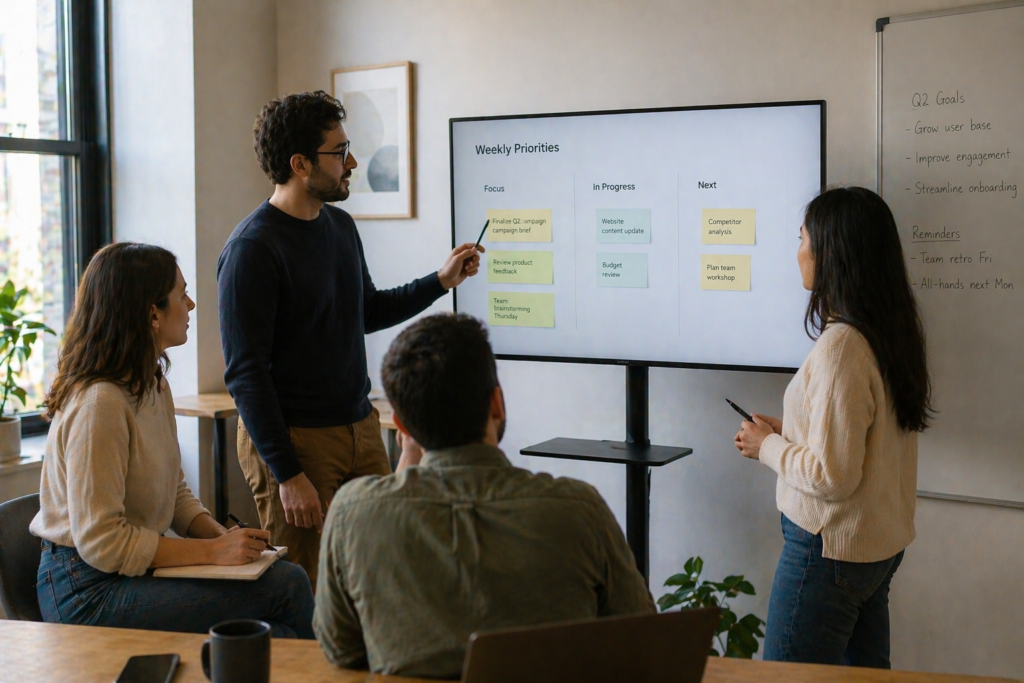
Weekly check-ins are among the most common team routines, yet they often deliver less value than expected. In many cases, they become predictable status updates where each person shares what they have been working on.
While this creates visibility, it does not always create alignment. Over time, the meeting becomes something the team attends rather than something that actively helps move work forward.
A more effective approach is to structure the check-in around priorities rather than individual updates. The conversation begins by confirming what matters most for the week. These priorities should be limited in number and clearly defined so that the team has a shared understanding of what they are working toward.
From there, the discussion focuses on progress against those priorities. This shifts the conversation away from activity and toward contribution. Team members are not just reporting what they did, but how their work is moving the team forward.
Blockers are then addressed in context. Instead of being mentioned briefly, they are discussed in terms of their impact on priorities. This makes it easier to decide whether they need immediate attention or can be handled separately.
A short alignment check toward the end of the meeting helps reinforce clarity. This is an opportunity to confirm that priorities are still relevant and that everyone is working from the same understanding.
The manager’s role is to facilitate this structure rather than dominate the discussion. Keeping the conversation focused on priorities and outcomes ensures that the meeting remains productive without becoming rigid.
Over time, this approach changes how the team experiences check-ins. The meeting becomes a point of alignment rather than a reporting exercise. Decisions are made more quickly, and the team leaves with a clearer sense of direction.